
Tumor markers
Serum-based tests for malignant solid tumors
The combined use of TK 210 and TPS can be utilized to identify patients with proliferative prostate carcinomas. The TK 210/biomarker combination has been shown to have treatment predictive value for patients with advanced prostate cancer (Szarvas et al., 2025, Urol Oncol 43(11):664).

Cell prolifiration biomarker
AroCell TK 210 ELISA
AroCell TK 210 ELISA is a quantitative immunoassay for the determination of human Thymidine Kinase 1 (TK1) protein concentration in blood samples using proprietary monoclonal antibodies. TK1 has been shown to be both a prognostic and treatment predictive marker, particularly useful for advanced prostate cancer.
The ELISA format is simple and robust, requires no unique instrumentation to perform. The kit protocol includes a pre-treatment step of the samples using a proprietary sample dilution buffer that releases TK1 from its aggregates and makes it more readily accessible for accurate measurements. The method measures both active and inactive TK1.

Solid tumor biomarkers
TPS, Monototal, UBC- tests
(outlicenced to Beckman Coulter)
Cytokeratins (keratins) are expressed exclusively by epithelial cells. The majority of human tumors are of epithelial origin (i.e. carcinomas) and express cytokeratins. Following cell death (apoptosis/necrosis), cytokeratins will be released from epithelial cells and carcinoma cells. Disintegration of normal epithelial cells will result in the release of cytokeratins into the lumen of glands or into the gut, whereas disintegration of carcinoma cells will result in the appearance of cytokeratins in the blood.
Cytokeratins have been used as serum tumor markers for more than 50 years and have been proven to be of clinical value for monitoring of cancer progression and as prognostic tools.
en rubrik
Using the combination of serum TK1 and TPS to identify proliferating carcinomas sensitive to chemotherapy
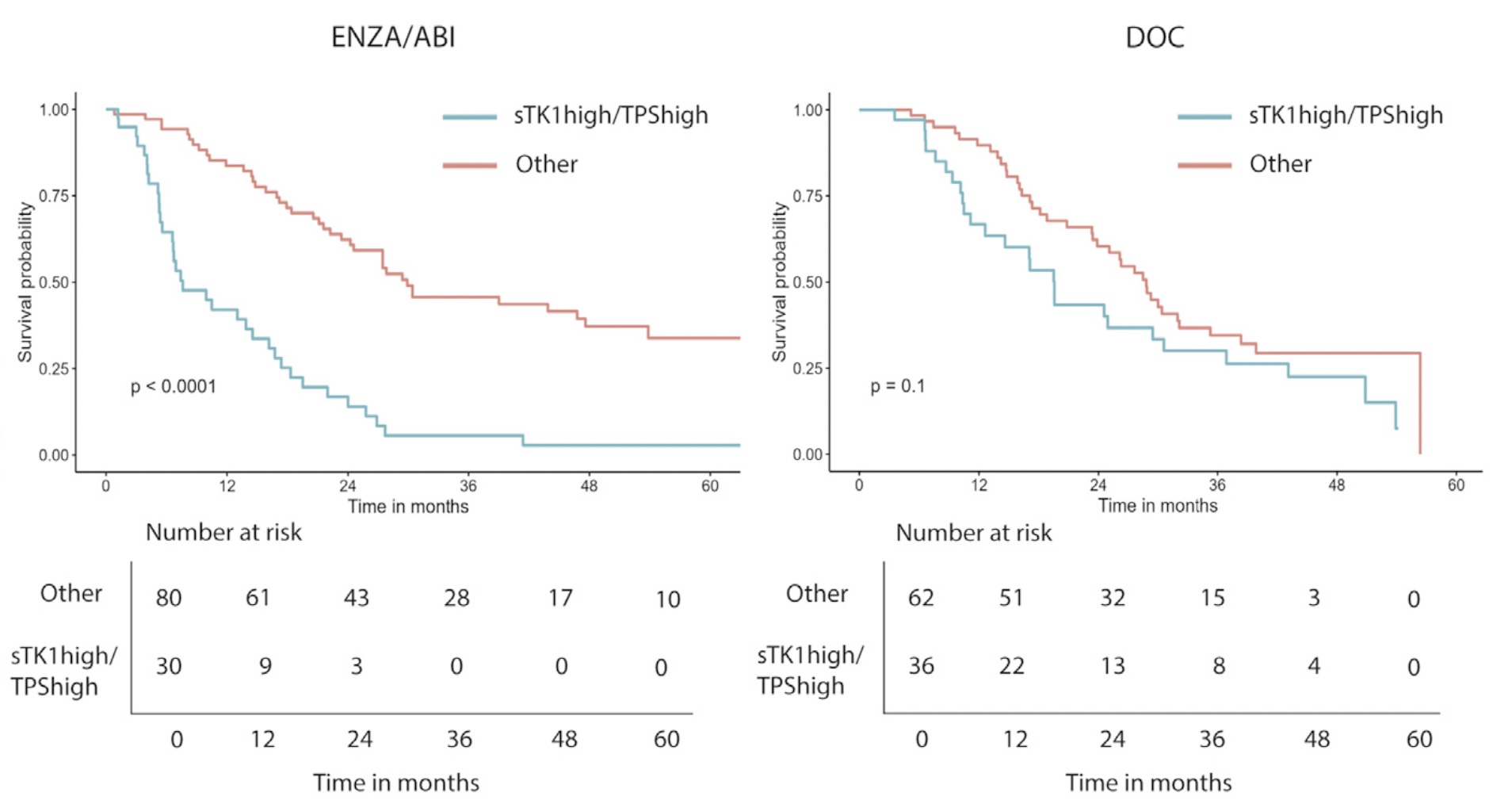
Simultaneous elevations of serum-TK1 and TPS are consistent with the presence of proliferating carcinomas. Recent data shows that patients that are positive for both these markers are benefitted by docetaxel chemotherapy (Szarvas et al., 2025, Urol Oncol 43(11):664).
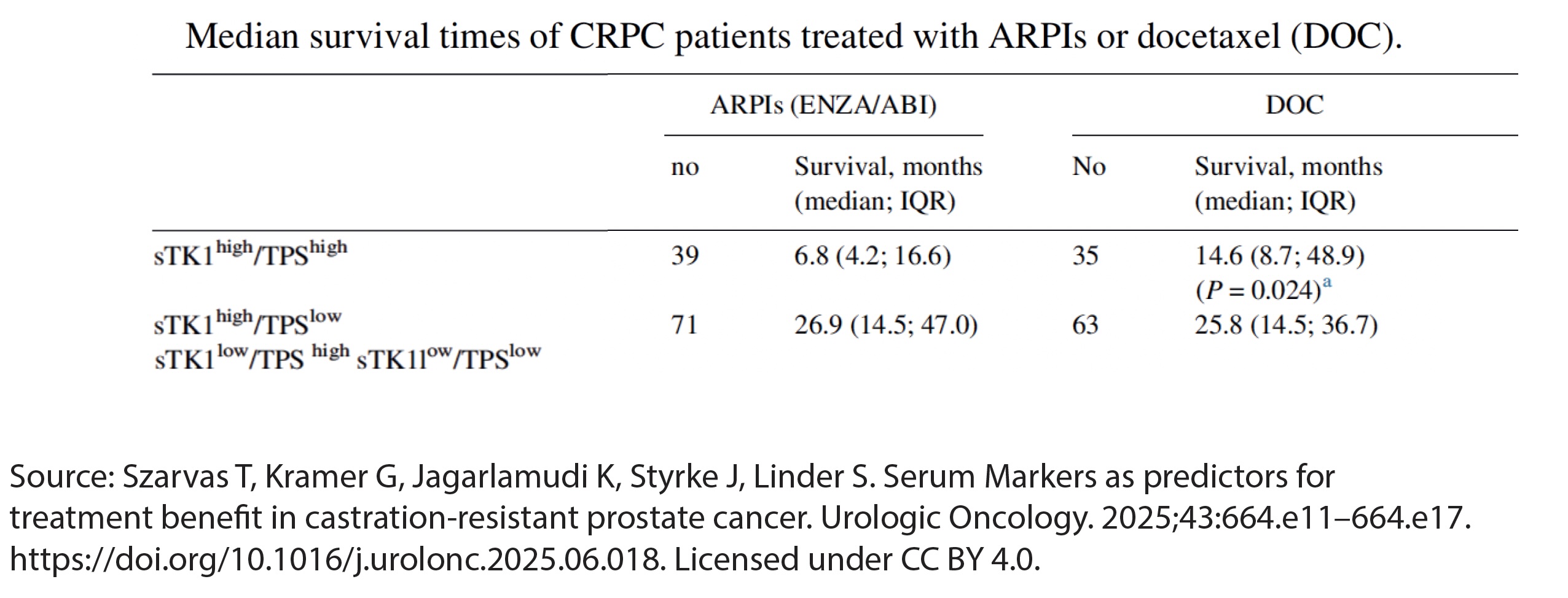
Various treatment options are available for castration-resistant prostate cancer (CRPC), including treatment with Androgen Receptor Pathway inhibitors, (ARPi) and docetaxel (DOC). As tissue samples are difficult to obtain in advanced cancer, we investigated whether serum markers could potentially support treatment decisions in CRPC. Overall survival (OS) was investigated in 208 CRPC patients treated with either ARPi or DOC.
Patients with high levels of both sTK1 and TPS treated with ARPi showed a mOS time of 6.8 (IQR: 4.2–9.5) months, compared with 14.6 (IQR: 8.7–48.9) months for patients treated with DOC (p=0.024). Patients who did not show double positivity (i.e., with low sTK1 and/or low sTK1 levels) showed similar mOS times regardless of treatment.
These results suggest that patients with high sTK1/high TPS levels derive greater benefit from DOC compared with ARPi treatment.
These observations are consistent with the expected mechanism of action of these drugs: docetaxel being a highly cell cycleactive drug whereas ARPIs do not show cell cycle specificity.
About us
We provide knowledge to decision.
IDL Diagnosticsis a Swedish diagnostics company with the vision to improve the monitoring of oncological and bacterial diseases. We have a broad product portfolio of IVD tests that deliver high-value clinical information for the detection of diseases.

Investors
We are listed on NASDAQ First North Growth Market.
We want to be the obvious choice within our segment in the markets where we are established. The market for our products is large and we are a smaller player with significant growth potential so far. IDL Diagnostics is unique for a company of this size.

Articals
Read articles about our progress in Africa, economic news and much more.